
When Memory Becomes History: Reflecting on Dr. King's Legacy |
Uncover the Untold Stories Behind Martin Luther King Jr.'s Legacy - Answering Your FAQs! |
Elders Living a New Reality is a digital publication produced by G Wiz Media Group LLC, dedicated to preserving lived history, elevating elder voices, and reframing aging as a period of wisdom, agency, and continued impact. |
Across Central Texas and beyond, adults over 50 are redefining what community, purpose, and daily life look like in this stage of living. The stories, trends, and reflections we explore here are meant to inform, inspire, and ground readers in what matters now. |
Do you remember where you were? Perhaps you were a college student when Dr. King stood in the Texas Union Ballroom in March 1962, challenging an audience of 1,200 to pursue genuine integration, not "token" measures. Or maybe you were among the 200 Black students navigating the University of Texas's campus of 20,000, knowing that Dr. King himself couldn't stay in an Austin hotel that night because of the color of his skin.
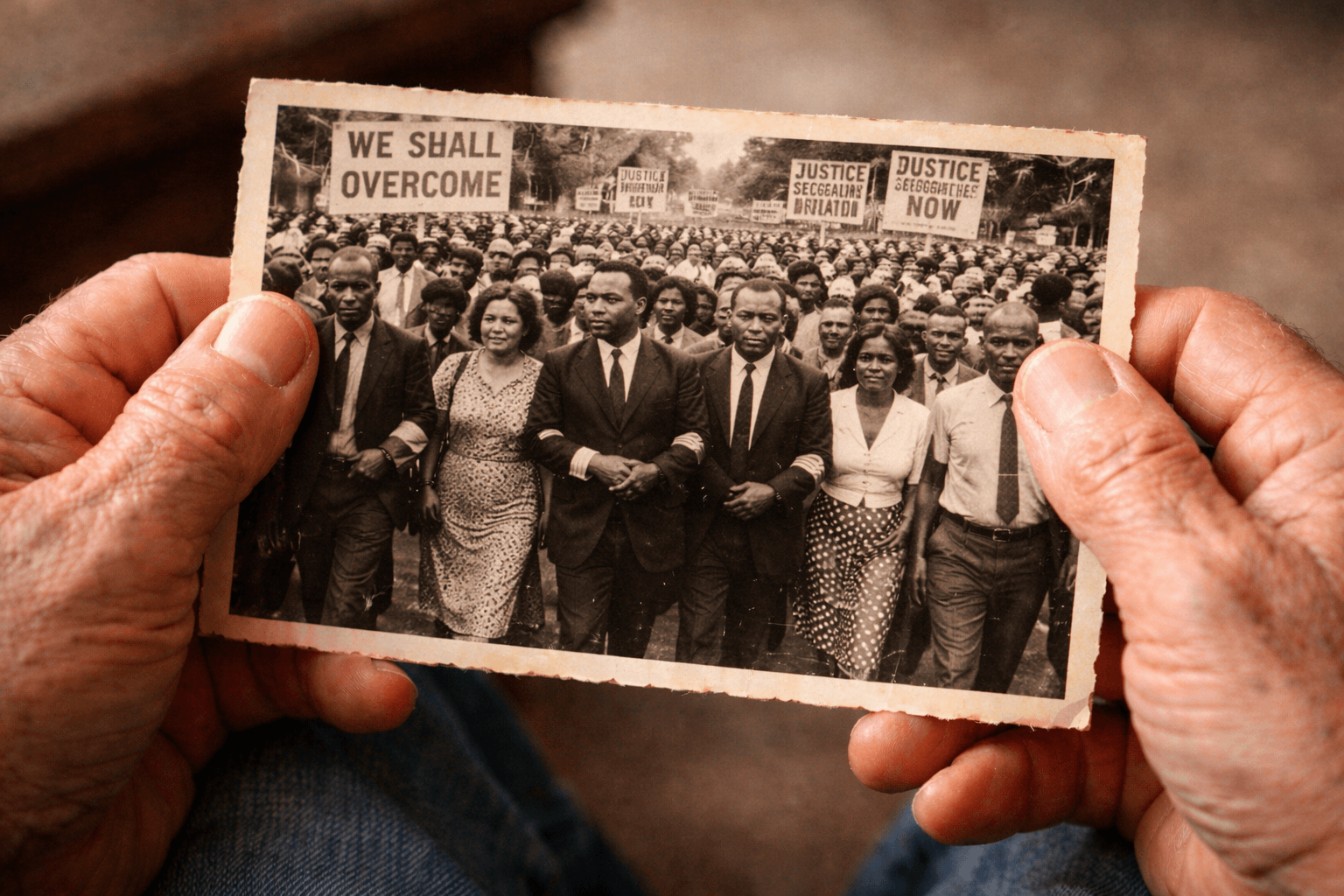
What we lived through has become history now—documented, commemorated, taught to our grandchildren in textbooks. But we carry something those pages cannot: the texture of that time, the weight of those choices, the courage it required simply to walk through a door.
In Round Rock, Texas—a story echoed in communities across America—a young woman named Ella Sauls Morrison graduated as valedictorian from Hopewell High School in 1964. The year before, she had been denied admission to the white high school in her own district. Rev. Anthony Mays became the first Black student to enroll at Round Rock High in 1964, two years after Dr. King's Austin visit.
Full desegregation didn't arrive until 1966, twelve years after Brown v. Board of Education.
Perhaps you remember similar stories from your own town—the quiet acts of courage, the long wait for justice, the particular faces of those who went first.
The struggle for justice has deep American roots. In Georgetown, Texas, in 1923—a full generation before the March on Washington—District Attorney Dan Moody successfully prosecuted Ku Klux Klan members in what became the first successful KKK prosecution in the nation. The courthouse where he stood still welcomes visitors today, a reminder that courage against injustice is not new, only newly recognized.
Why This Matters Today What we witnessed—and what many of us participated in creating—was not merely the dismantling of segregation, but the slow, painstaking construction of the "beloved community" Dr. King envisioned. When we see our great-grandchildren playing with friends whose families emigrated from continents we've only visited on television, we're watching seeds we helped plant come to flower.
The work continues in ways both quieter and more urgent than the marches we remember. It lives in the stories we choose to tell, in our willingness to remain uncomfortable with injustice, in how we model for younger generations that progress is not inevitable—it is chosen, daily, by ordinary people doing extraordinary things.
You didn't just read about this history. You created it. And in the wisdom of your years, you understand what the textbooks cannot teach: that the arc of the moral universe bends toward justice only when human hands do the bending.
|
Published by Elders Living a New Reality, a publication exploring purposeful living, wellness, and community for adults over 50. |
Frequently Asked Questions About Martin Luther King Jr. |
1. What was Martin Luther King Jr.'s most famous achievement? Dr. King's leadership in the Civil Rights Movement led to landmark legislation including the Civil Rights Act of 1964 and the Voting Rights Act of 1965. His nonviolent approach to fighting racial injustice inspired millions and fundamentally transformed American society, helping to dismantle legal segregation and secure voting rights for African Americans. 2. Why is Martin Luther King Jr.'s "I Have a Dream" speech so significant? Delivered on August 28, 1963, during the March on Washington, this speech articulated a powerful vision of racial harmony and equality. With over 250,000 people in attendance, Dr. King's words—"I have a dream that my four little children will one day live in a nation where they will not be judged by the color of their skin but by the content of their character"—became a defining moment in American history and continues to inspire movements for justice worldwide. 3. How did Martin Luther King Jr.'s philosophy of nonviolence change the world? Inspired by Mahatma Gandhi, Dr. King proved that peaceful resistance could overcome oppression. His commitment to nonviolent protest—through sit-ins, boycotts, and marches—demonstrated that moral courage and love could triumph over hatred and violence. This philosophy influenced civil rights movements globally and earned him the Nobel Peace Prize in 1964 at age 35, making him the youngest recipient at that time.
|
0 Comments
Join the conversation
Be the first to comment
Share your thoughts above.